

Will you make the list?
Where you go to school—prestige- and location-wise—matters a lot these days.

There are around 2,500 degree-granting, four-year colleges in the United States. I went to a tiny college in Vermont. I went to a “non-target” school that’s barely on the map. Despite its small stature, I received a top-tier education and all of the opportunities I could have possibly hoped for.
But, would the F500 agree with me? Would they take my education seriously?
These days, I’m not so sure.
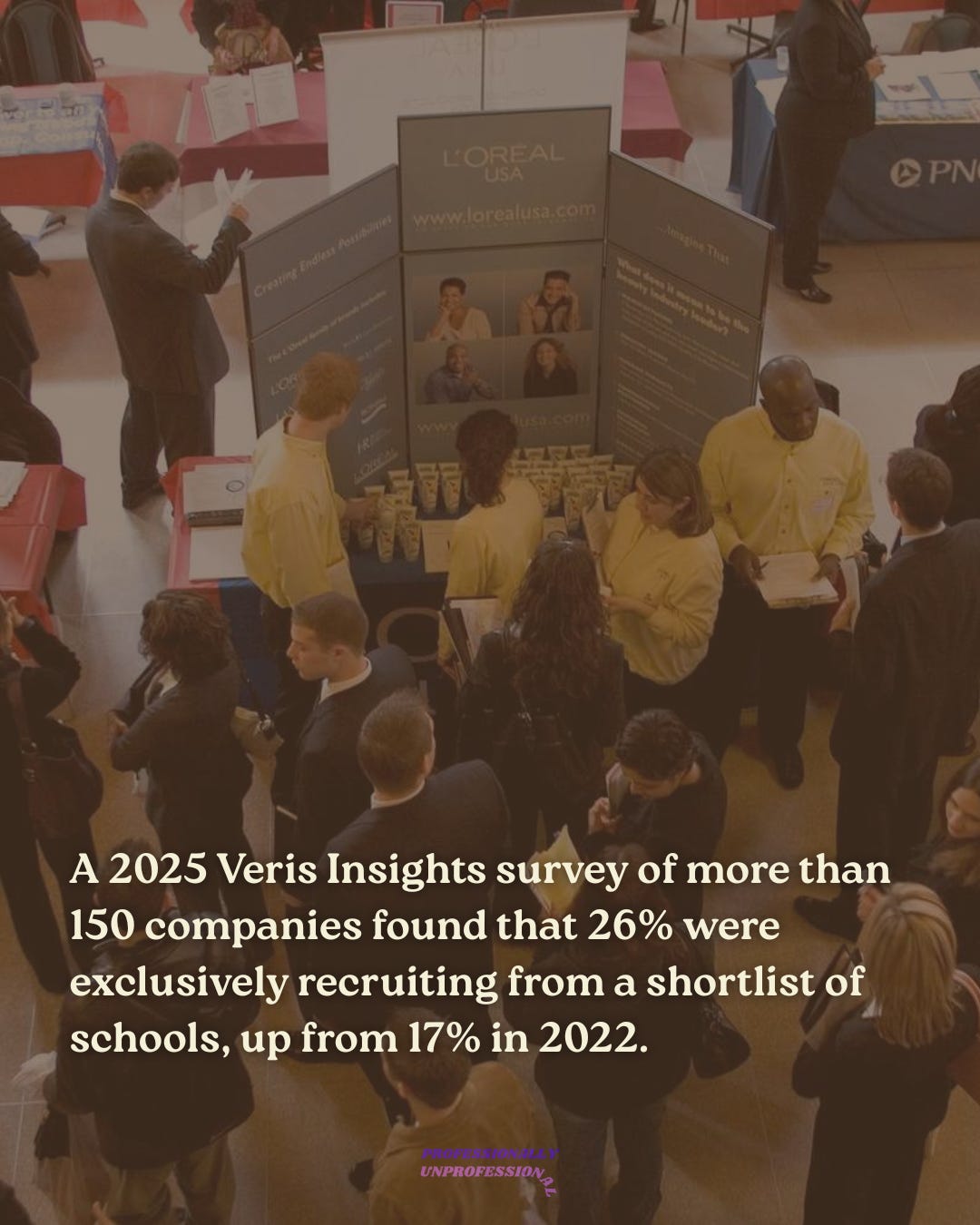
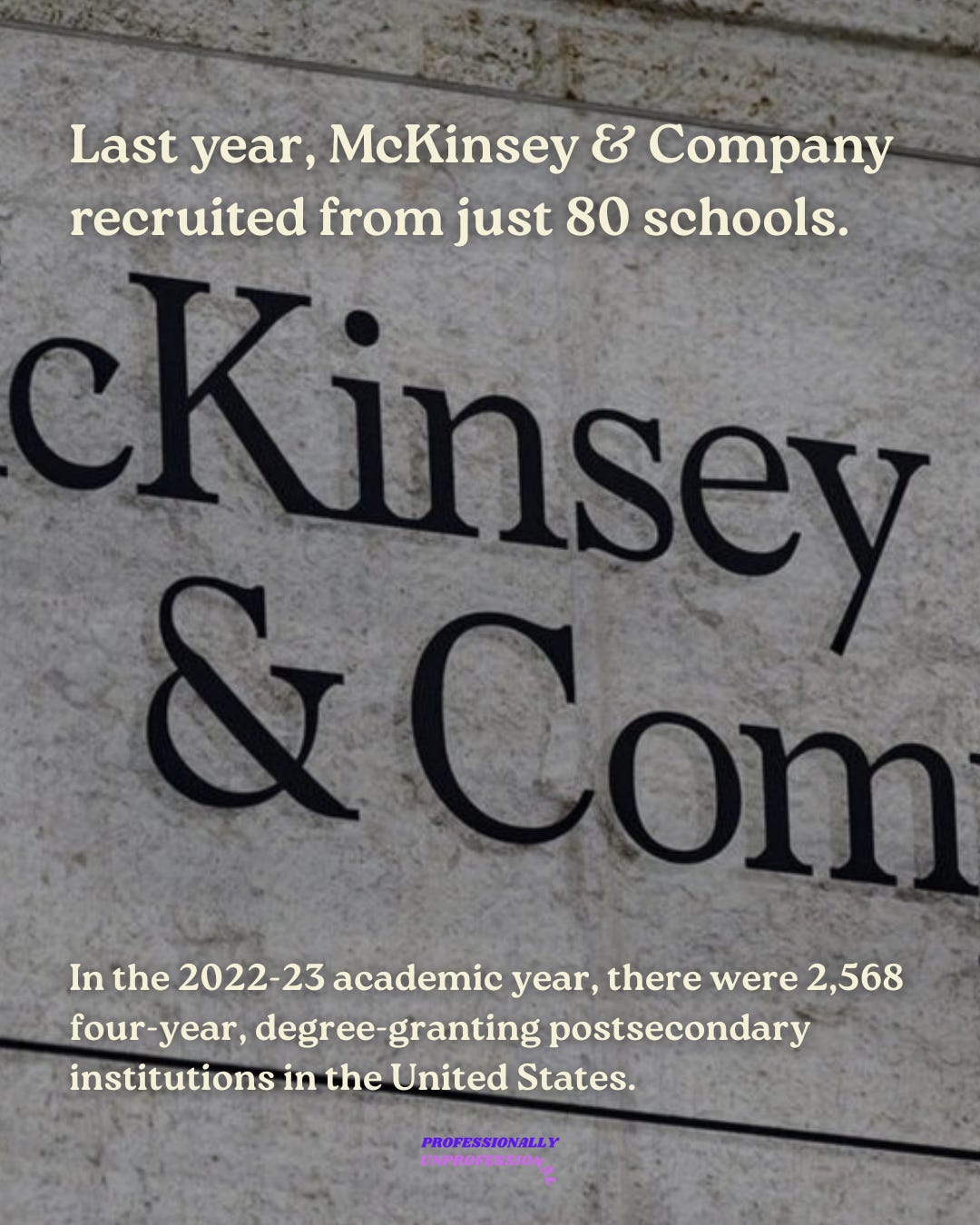
Many companies, like GE and McKinsey & Company, are turning to local institutions and exclusive short lists of schools in efforts to cut back on campus recruiting expenses. In fact, McKinsey & Company recruited from just 80 schools this past year.
I can’t say I didn’t see this coming, but if skills-based hiring is all the rage, then what’s the need for this kind of push? Surely, large corporations can afford robust early career recruiting practices.
Career services offices aren’t necessarily bothered by this shift. Partnerships between campuses and local employers enhance internship and job recruiting and outcomes through branding, relationship-building, engagement through campus events, and sharing insights. As more employers move beyond transactional engagement with career services, we’re likely to see stronger levels of formalized collaboration and, potentially, altered geographic first-destination outcomes.
“Talent is everywhere” is no longer a marker of today’s early career recruiting landscape.
Early talent is hurting. The job search for new grads is unbelievably challenging. Students have a lot to reckon with when it comes to their higher education. Education will always be valuable, but can we continue to count on it for world of work success? Should we have ever relied on education as such?
As a coach, it’s challenging to instill positivity and eagerness in jobseekers when the prospects are quite bleak. How do you tell someone to keep pressing on and that the right opportunity will find them when they’ve been searching for upwards of a year? How do you tell the student who had to prioritize consistent part-time work over internships that their career journey may be rocky?
I’m confident in the capacity of early talent. I’m not confident in the capacity of the world of work to invest in early talent. When gaining an education and game-planning college becomes the driving factor in labor market outcomes, I think we’ve lost the impact that breadth of experience, background, and capability have on just the work we do, but the society we create and sustain.